















Langstrasse Zurich: History and Present of the Red-Light District

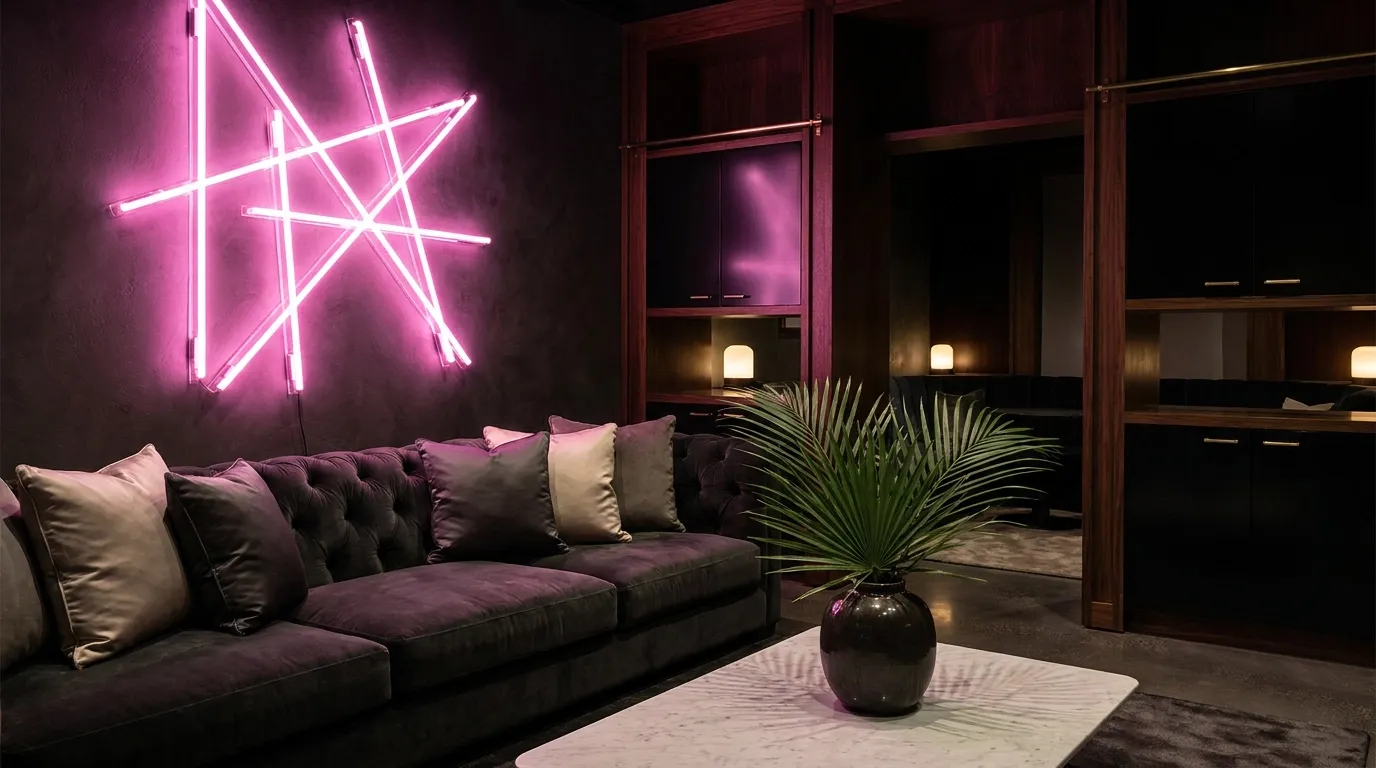
Ask anyone in Zurich about the red-light district and you will get one answer: Langstrasse. For decades, the name has stood for nightlife, the sex trade and everything else that had no place in the city of Zwingli. Except the picture no longer fits. Walk through Kreis 4 today and you will see cocktail bars next to erotic studios, families with prams outside sex shops, yoga studios above contact bars. Langstrasse is still Switzerland's best-known red-light address. But it has long ceased to be only that.
This article takes a closer look: what was Langstrasse, what is it today, what has the city regulated, and where has the scene gone that you hardly see on the street anymore?
What Langstrasse used to be
Aussersihl, Zurich's Kreis 4, was never a genteel neighbourhood. It housed those who were new in town and short of money: workers, newcomers, immigrants. Flats were cheap, the station was close, the watchful eye of the bourgeois city far away. And wherever a city has its margins, the trade it officially does not want takes root: dive bars, cabarets, sex cinemas, brothels. Street prostitution was as much part of the streetscape as the trams.
Over the decades, this became a reputation. Langstrasse was considered the most disreputable street in Switzerland, and Zurich cultivated that image with a mixture of shame and quiet pride. In the eighties and nineties, the open drug scene arrived, pushing into the neighbourhood from the nearby riverbank. Those who lived here at the time remember less of the glamour than the syringes in the doorway.
What strikes me is how divided the city was in the way it looked at the quarter. For some, Langstrasse was a blemish they would have liked to renovate out of existence. For others, it was the only place where Zurich smelled like a big city. I think both were right. That very tension made the street what it is today.
What Langstrasse is today
From the noughties onwards, the city began to invest deliberately in the neighbourhood: more presence, renewal projects, pressure on run-down properties. In parallel, students, creatives and later high earners discovered Kreis 4 as a place to live. Rents climbed. The crowd changed.
Today, Langstrasse is above all a nightlife strip. On weekends, thousands push their way between bars, clubs and takeaways, and a large share of them have no interest in red light whatsoever. The sex trade is still there, though. Studios on the upper floors, contact bars in the side streets, sex shops with neon signs that have hung there for decades. It no longer dominates the neighbourhood; it coexists. Sometimes in the same building: craft beer downstairs, a studio upstairs.
What tends to be forgotten: the sex workers are part of this neighbourhood, not its backdrop. They work here, some for years; they know the bar owners and the neighbours. The gentrification that made the quarter safer and more expensive puts pressure on them too. Rising rents hit an erotic studio just as hard as a shared flat. You can like the new Langstrasse and still see that something is being displaced here that long belonged to the street's identity.
What the PGVO changed
The biggest turning point came in 2013 with the City of Zurich's Prostitution Trade Ordinance. Since then, street sex work has only been permitted in a few clearly defined zones, and anyone working there needs a permit. For Langstrasse, this meant one thing: the street prostitution that had shaped the neighbourhood for decades largely disappeared from view. In its place, the city created a supervised street sex work site elsewhere, with infrastructure and support on site. Which zones apply, how the permit works and what happens in the event of violations is covered in detail in the linked article. Here, one observation is enough: red light on Langstrasse was not banned, it was moved from the street into the establishments.
Where the scene has gone
Because sex work has not disappeared. It has relocated, twice. First from the street into the establishments: studios, salons, clubs. Then, and this is the bigger shift, onto the internet. Contacts that used to be made at the kerbside are now made through profiles, chats and booking requests. Today's client does not stroll through the neighbourhood to see who is around. He scrolls.
There is more behind this than convenience. Online, both sides can clarify their expectations in advance. Prices, setting and boundaries are stated in a profile instead of left vague. For sex workers, this means more control over whom they meet. For clients, more discretion than a walk through a contact bar ever offered. The differences between the types of establishment, in other words salon, studio, club or escort, are taken apart in a separate article. The short version: the escort model is the most consistent form of this relocation, because the meeting place becomes freely selectable and the entire approach happens online. Anyone who wants to meet someone in the city today can find escorts in Zurich in a few clicks, without ever setting foot in Kreis 4.
What I find remarkable is that the city follows this movement. The counselling service Flora Dora, rooted in the neighbourhood since the nineties and based at Langstrasse 14 today, no longer reaches out to sex workers only on the street, but also in the studios and online on the platforms. That says a great deal about where the scene takes place today: whoever wants to reach it has to go online.
Frequently asked questions about Langstrasse
Is Langstrasse still a red-light district?
Partly. Erotic studios, contact bars and sex shops still exist, but they no longer define the quarter. Langstrasse today is first and foremost a nightlife and residential neighbourhood in which red light is one tenant among many.
Is street prostitution permitted on Langstrasse?
No. Since the PGVO of 2013, street sex work in Zurich has only been permitted in defined zones, subject to a permit, and the Langstrasse quarter is not one of them. Inside the establishments, however, sex work remains legal.
What are street sex work zones?
Areas designated by the city in which street sex work is permitted at certain times. Outside these zones, solicitation on the street is prohibited. The details, including the permit requirement, are governed by the Prostitution Trade Ordinance.
Are there more discreet alternatives?
Yes, and today they are the norm. On platforms such as Gingr, meetings with verified escorts can be arranged online, with profile, prices and arrangements agreed in advance. The meeting place is freely selectable: a hotel, your own home or the escort's studio.
In short
- Langstrasse in Kreis 4 was Switzerland's best-known red-light district for decades.
- Since the noughties, gentrification has turned the quarter into a nightlife strip in which erotic establishments persist but no longer dominate.
- The PGVO of 2013 moved street prostitution into defined zones outside the quarter; within the quarter itself, street sex work is prohibited.
- The scene has moved from the street into studios and, above all, onto the internet; escort bookings via platforms are the discreet standard today.
- Sex workers are actors in the neighbourhood, and services such as Flora Dora now accompany them all the way into the online scene.
You would rather see directly who is available than wander through the quarter? Then discover verified escorts in Zurich on Gingr.